
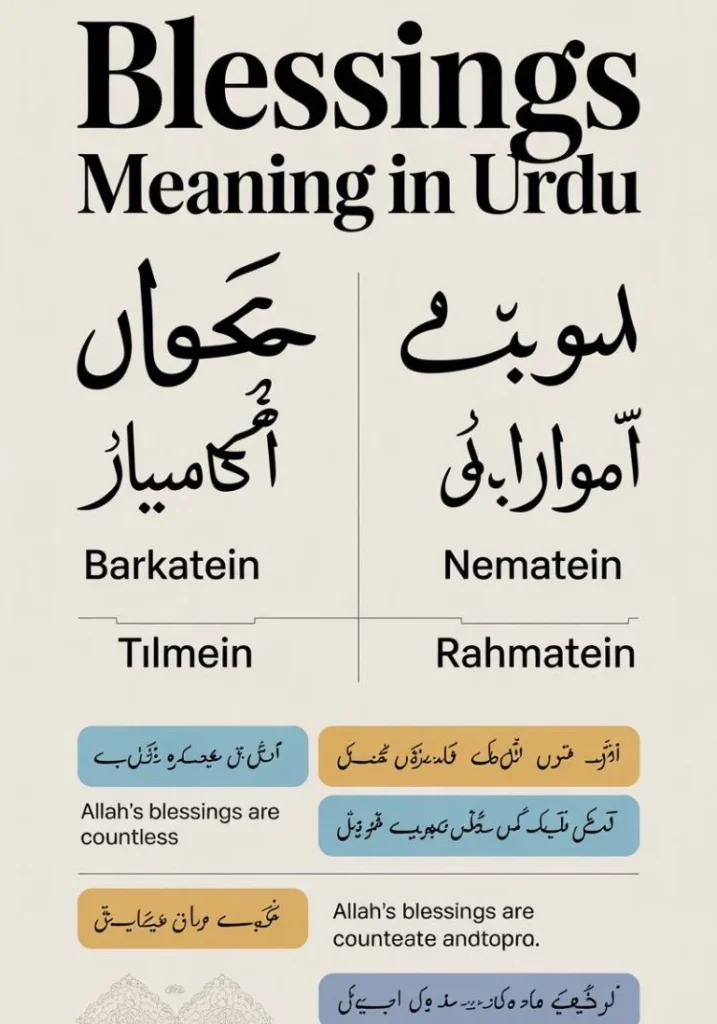
Blessings play a powerful role in our daily lives, offering peace, growth, and divine favor. In simple terms, Blessings Meaning in Urdu is understood as برکت—a concept that represents increase, goodness, and lasting benefit granted by Allah. Many people search for the meaning of blessings in Urdu to better understand how barakah appears in time, health, wealth, and relationships. Through Islamic teachings and everyday experiences, blessings are not always about quantity but about value and satisfaction. This article explains the meaning with examples, helping readers see how small things can bring great goodness. By exploring the Urdu meaning of blessings, you will gain clarity, inspiration, and practical understanding for daily life.
Why “Blessing in Urdu” Matters
Every culture has ways to express gratitude, but Urdu captures the nuance of divine favor uniquely. The word barakat conveys more than just good fortune; it represents abundance, continuity, and heartfelt gratitude. In a diaspora context, especially in the USA, using familiar terms in daily life connects generations to heritage, faith, and social responsibility. Knowing how to interpret blessings ensures that small acts, like sharing food or offering a prayer, become meaningful practices that ripple across families and communities.
The Linguistic Depth of Barakah (برکت)
The Arabic root “baraka” forms the basis of the word, combining stability, growth, and continuity. Stability grounds a person’s actions, growth multiplies efforts beyond expectation, and continuity ensures a lasting flow of goodness. In Urdu, barakah extends to food, income, and happiness. For instance, a meal that satisfies more people than expected is a reflection of khane mein barakat, while steady sustenance embodies rizq mein barakat. These layers provide a richer understanding than literal translations of “blessing” in English.
Barakah in the Qur’an — A Divine Stamp of Approval
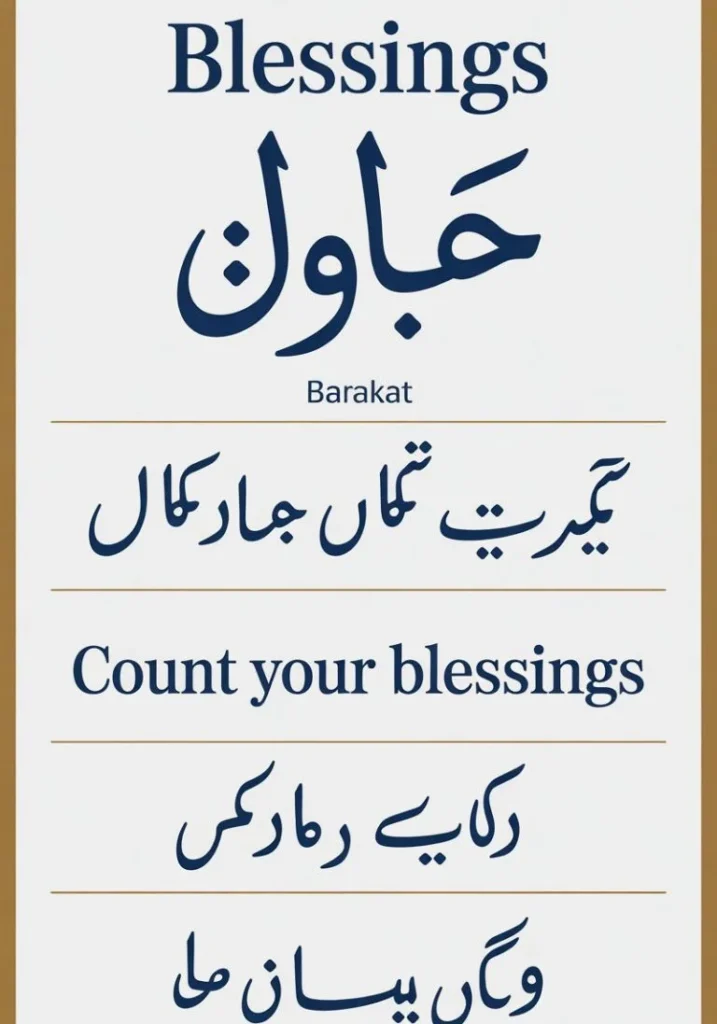
The Qur’an describes blessings as tangible and transformative. A blessed book brings guidance, fertile land nurtures life, and divine favor multiplies when a community obeys Allah. For Urdu speakers, interpreting “blessed” as mubarak or barakat bridges sacred texts and practical life. This approach turns abstract theology into actionable insight, allowing readers to recognize blessings in locations, sustenance, and everyday experiences.
Prophetic Guidance on Securing Barakah
Prophet Muhammad ﷺ emphasized actions that attract blessings:
- Starting early aligns human effort with divine favor, enhancing productivity.
- Giving charity does not decrease wealth but invites spiritual abundance.
- Maintaining family ties fosters provision and longevity.
These teachings, deeply embedded in Urdu madrassahs and cultural practice, offer a roadmap for integrating barakah into both domestic and professional life.
Recognizing Barakah in Daily Life
Blessings often appear subtly. Completing tasks efficiently, a modest meal feeding extra guests, or a home filled with peace demonstrates divine favor. These experiences highlight sukoon ki barakat, showing that true blessings go beyond material wealth. Observing and reflecting on these moments fosters gratitude, which itself acts as a conduit for further blessings.
Practical Paths to Invite Blessing
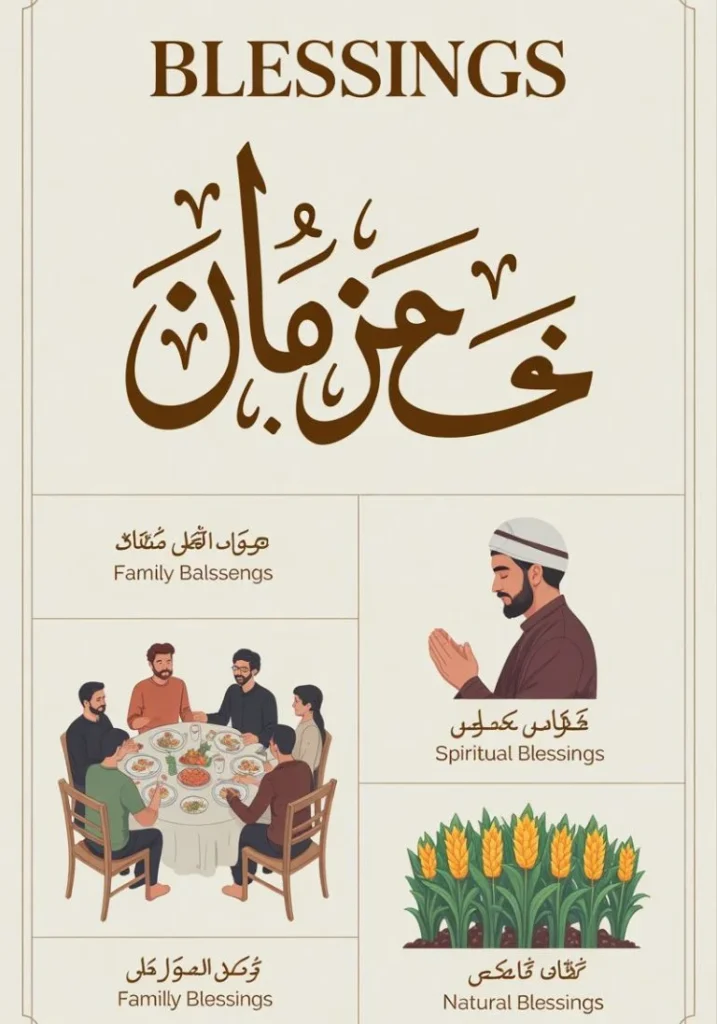
Several everyday actions attract barakah naturally:
- Faithfulness and Taqwa: Honesty, prayer, and mindfulness in daily routines.
- Gratitude or Shukr: Saying “Alhamdulillah” after meals or achievements.
- Regular Charity (Sadaqah): Small, consistent contributions build generosity.
- Strengthening Family Bonds: Maintaining kinship and resolving conflicts fosters abundance.
Morning routines aligned with these habits, including Qur’an recitation, dua in Urdu, and healthy meals like those incorporating kalonji, set a foundation for continuous blessings.
Embedding Barakah Into an Urdu-Speaking Lifestyle
Cultural and linguistic practices enrich daily blessings. Speaking prayers in one’s mother tongue connects the heart more deeply to intention. Families hosting weekly tafsir sessions or keeping visible Qur’ans encourage consistent engagement. Carrying tasbih beads in daily life transforms mundane moments into reflective ones, while traditional remedies like black seed link health with spiritual mindfulness. Such integration ensures barakah permeates both spiritual and physical dimensions.
Barakah-Friendly Home Economics
Home management also influences blessings. Earning through lawful (halal) means, fair trade, and ethical pricing reflect moral alignment. Labeling ledgers with بسم الله or welcoming guests as a form of divine service reinforces abundance. These practices cultivate not only financial stability but also spiritual and communal prosperity, highlighting that blessings in Urdu-speaking homes thrive through conscious intention and ethical conduct.
Community Blessings — Extending Beyond the Self
Blessings multiply when shared. Community prayer, volunteering, supporting local ethical businesses, and preserving the environment enhance collective barakah. Actions that uplift others resonate spiritually and socially, showing that divine favor is interlinked with ethical stewardship, social cohesion, and environmental responsibility. In essence, blessings are both individual and communal.
Common Urdu Phrases That Echo Barakah
Familiar expressions encapsulate gratitude and divine favor:
- “Allah barakat de” – May Allah bless it
- “Mashallah, barkat hai” – By Allah’s will, there is blessing
- “Rehmat hi rehmat” – Nothing but mercy
- “Barkatein badhaana” – To increase blessings
Regular use of such phrases integrates mindfulness and reflection into daily routines, fostering awareness of divine favor in tangible and intangible ways.
Putting It All Together: A Sample Day of Barakah
Consider Ayesha, an Urdu-speaking professional in the USA:
- She begins with Fajr prayer, Qur’an recitation, and dua in Urdu for productivity.
- Breakfast includes kalonji; she expresses gratitude and checks on family.
- Commute time becomes a moment for dhikr.
- At work, she acts ethically, says “Bismillah,” and gives a small sadaqah.
- Returning home, she welcomes unexpected guests.
- Reflection before bed includes noting three blessings of the day, completing a cycle of mindful living.
Conclusion
Understanding the meaning in Urdu with examples is more than translation; it shapes a holistic lifestyle. Incorporating faith, gratitude, and social responsibility nurtures barakah, bringing peace, purpose, and abundance. Recognizing, cultivating, and sharing blessings transforms ordinary routines into a sustainable, spiritually enriched life.
Prince is the founder of LifeBlessings101,
Sharing daily blessings, faith-based quotes, and inspirational
messages to bring peace, hope, and positivity into everyday life